


Short Answer
Span of guideway on a lathe refers to the width or span of the machine-bed guideway that supports and guides major moving components such as the carriage. It is normally specified in millimeters, for example 400 mm, 550 mm, 600 mm, 755 mm, 970 mm, or 1600 mm.


This parameter is closely related to the structural size and rigidity of a lathe, but it should not be confused with swing over bed, turning diameter, or distance between centers. Xinheng, for example, lists “Span of guideway” as a separate capacity specification across its CNC and conventional lathe ranges.
In general, as workpieces become larger, longer, and heavier, a wider and heavier machine-bed structure is often required to provide sufficient support for the carriage and resist cutting forces.
Why Does Guideway Span Matter?
During turning, forces generated between the workpiece and cutting tool are transmitted through the turret or tool post, carriage, guideways, and machine bed.
The guideway system therefore forms an important part of the machine’s structural foundation.
A suitable guideway span helps provide:
For long-shaft machining, Xinheng specifically notes that as shaft diameter and weight increase, machine rigidity becomes increasingly important and that a wider, heavier bed provides a stronger foundation for demanding applications.
However, guideway span alone does not determine machining performance. Bed structure, machine weight, spindle torque, motor power, workpiece support, tooling, and cutting parameters must also be considered.
Guideway Span vs Other Lathe Parameters
These specifications describe different parts of machine capacity:
| Parameter | What It Describes |
| Span of Guideway | Width/span of the bed guideway |
| Swing Over Bed | Maximum theoretical workpiece diameter that can rotate over the bed |
| Swing Over Carriage | Diameter that can rotate above the carriage |
| Spindle Bore | Diameter of the opening through the spindle |
| Turning Length | Available longitudinal machining length |
| Distance Between Centers | Distance available for supporting work between centers |
Therefore:
600 mm guideway ≠ Φ600 mm turning diameter.
For example, Xinheng’s 550/600 mm guideway CNC lathe family includes multiple models with different swing capacities, workpiece lengths, and maximum workpiece weights even though they belong to the same general guideway class.
Example: How Guideway Span Changes with Machine Capacity
Xinheng’s product range provides a practical way to understand this parameter.
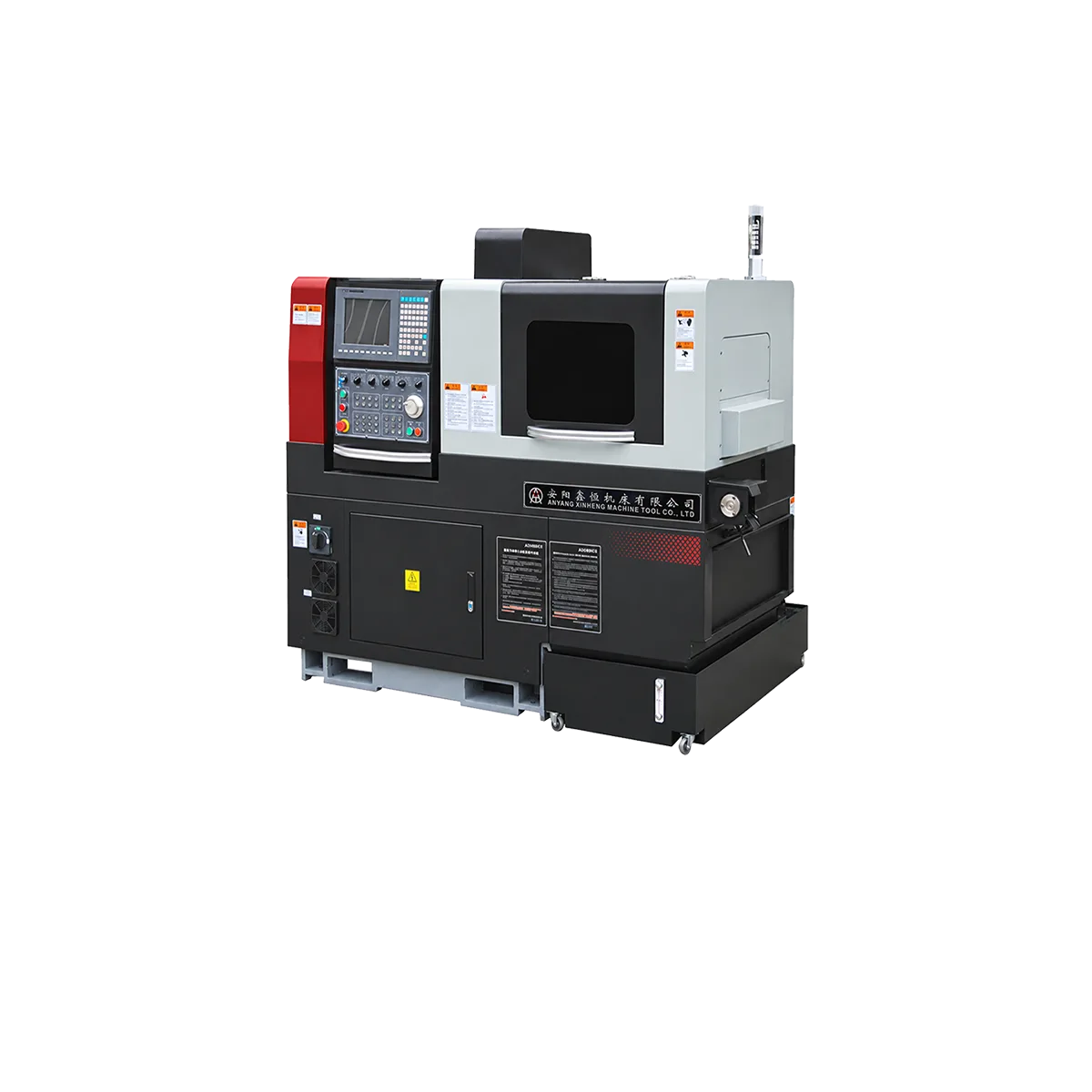
The smaller CNC lathe family includes 260, 312, and 400 mm guideway machines for relatively small and medium components.
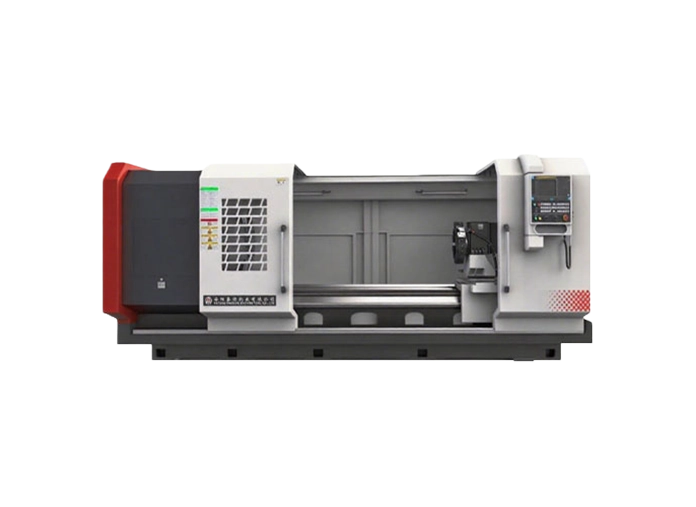
For larger shafts, pipes, rollers, and cylindrical parts, Xinheng offers 550/600 mm guideway CNC lathes with workpiece capacities up to 4 tons depending on the model.
The 970 mm guideway CNC series moves into a substantially heavier class. Models CK61125E, CK61140E, CK61160E, and CK61180E all use a 970 mm guideway and are rated for workpieces up to 10 tons.
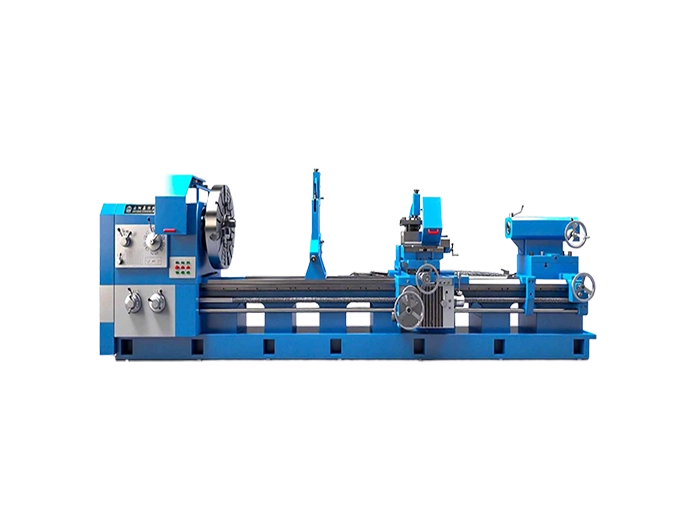
At the heavy-duty end, Xinheng’s CK61160/CK61200/CK61250 series uses a 1600 mm span of guideway with a rectangular three-guideway structure and supports workpieces up to 32 tons.

This does not mean that guideway width alone creates the higher capacity. Rather, it shows how guideway span generally increases as part of an overall heavier machine design.
Common Mistakes
One common mistake is using guideway span as the maximum turning diameter. These are completely different specifications.
Another is assuming that a 600 mm guideway lathe is automatically more accurate than a 400 mm guideway machine. A wider guideway can contribute to a more rigid structure, but machining accuracy also depends on machine design, manufacturing quality, spindle condition, guideway accuracy, tooling, setup, and cutting conditions.
Buyers may also choose an unnecessarily large machine simply because it has a wider guideway. If the workpiece is small and the cutting load is light, a smaller CNC lathe may provide a more appropriate and economical solution.
Buyer Checklist
When comparing guideway spans, check them together with:
The final machine should be selected from the complete workpiece and machining process, not guideway span alone.
FAQ
Is span of guideway the same as guideway width?
In Xinheng’s machine specifications, “span of guideway” is the dimensional parameter used to describe the guideway width/span and is given in millimeters.
Does a wider guideway mean better rigidity?
A wider guideway can form part of a stronger structural foundation, particularly for larger and heavier workpieces. However, overall rigidity depends on the complete machine design, not this dimension alone.
Does a 970 mm guideway mean the lathe can only machine Φ970 mm parts?
No. Xinheng’s 970 mm guideway CNC series includes machines with swing over bed from Φ1250 to Φ1800 mm, showing clearly that guideway span and swing diameter are separate specifications.
How should I choose the right guideway span?
Start with the workpiece diameter, length, weight, material, machining allowance, and required operations. Then evaluate guideway span together with swing, spindle capacity, motor power, chuck, tailstock, and support configuration.
For different guideway sizes and machine capacities, see Anyang Xinheng Machine Tool.